
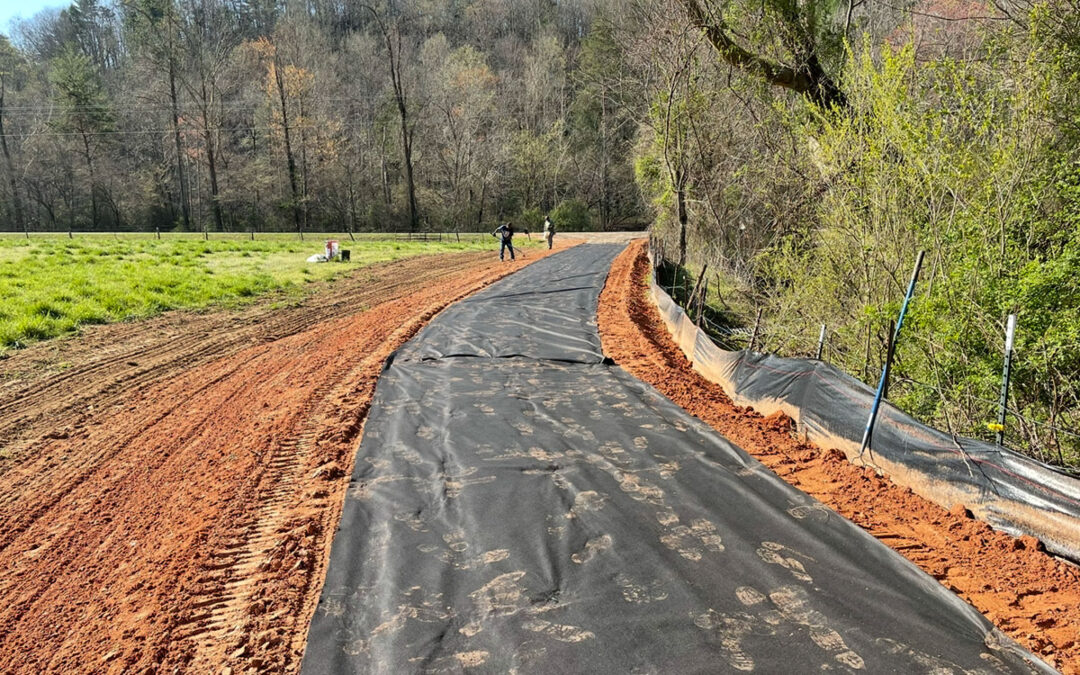
Building a road on rural land is not the same as spreading gravel over a path and hoping it holds. In the foothills of North Carolina, every road has to work with the land around it. Slopes, soil conditions, runoff, wooded areas, low spots, and future property use all affect how that road should be planned and built.
A new road may be needed for a homesite, farm access, hunting property, timber access, equipment movement, or general property maintenance. Whatever the purpose, the goal is the same: create dependable access without creating drainage problems, erosion issues, or constant maintenance headaches.
The best road-building decisions happen before the work begins. A well-planned road should follow the land where possible, move water away from the road surface, support the vehicles that will use it, and make the property easier to use for years to come. Foothills Land Services helps property owners clear, grade, and build roads that make sense for foothills terrain.
Road Building Tips For A Better New Road
A road is only as good as the planning and prep underneath it. These tips can help property owners understand what goes into building a new road that is practical, durable, and suited to the land.
1. Start With The Right Road Location
Before any clearing or grading begins, the route needs to be planned carefully. The shortest path is not always the best path. A road that cuts straight through wet ground, crosses unstable soil, or runs directly up a steep slope can become expensive to maintain later.
The best route usually balances access, drainage, slope, and long-term use. On rural property, a road may need to reach a homesite, barn, pasture, pond, hunting area, wooded section, or future building pad. Thinking through those needs early can help avoid awkward turns, tight access points, or sections that have to be rebuilt later.
A good road location should consider:
- Slope: The road should avoid overly steep grades when possible.
- Drainage: Water needs a planned path across, under, or away from the road.
- Soil conditions: Soft or wet areas may need to be avoided or improved.
- Vehicle access: Trucks, trailers, equipment, and emergency vehicles may need room to turn.
- Future use: A road built for today should not limit what you want to do with the property later.
Foothills Land Services can help evaluate the land and shape a road route that works with the property instead of fighting against it.
2. Plan Road Drainage Before Dropping Gravel
Water is one of the biggest reasons rural roads fail. If runoff has nowhere to go, it will find its own path. That usually means ruts, washouts, soft spots, standing water, and gravel pushed into ditches or low areas.
Good drainage starts with grading. The road surface should be shaped so water moves off the travel area instead of sitting on top of it. Depending on the property, drainage may also involve ditches, culverts, swales, or other water-management solutions.
A road that looks smooth on day one can still fail quickly if drainage is ignored. This is especially true in foothills terrain, where storms can send water downhill fast. A road near a wooded slope, creek crossing, low field, or driveway entrance needs a plan for how water will move during heavy rain.
Foothills Land Services understands that road building and drainage work go together. A new road should give you access, but it should also protect the surrounding property from erosion and water damage.
3. Build a Solid Road Base
The surface of the road is what people notice first, but the base is what supports everything above it. If the ground underneath is soft, poorly compacted, or full of organic material, the road can sink, shift, rut, or wash out.
A proper road base starts with removing material that should not be under the road. Roots, topsoil, loose debris, and soft spots can cause problems if they are left in place. Once the road path is cleared, grading and compaction help create a more stable foundation.
For many rural roads, stone is added in layers to help build strength and improve drainage. The exact approach depends on the soil, slope, road use, and site conditions. A road used by light vehicles may not need the same preparation as a road used by dump trucks, farm equipment, or construction vehicles.
Cutting corners on the base can lead to repairs later. Investing in proper preparation helps the road hold its shape, shed water, and handle regular use.
4. Consider What Vehicles Will Use The Road
Not every road needs to be built the same way. A driveway to a cabin, an access road for logging equipment, and a farm road for tractors all have different requirements.
Before building a road, it is important to think about who will use it most often. Will the road need to handle trucks and trailers? Will delivery vehicles need to turn around? Will heavy equipment use it during construction? Will the road be used year-round or only seasonally?
Width, grade, turning radius, base depth, and entrance design all depend on the road’s purpose. A narrow road may be fine for occasional ATV or pickup access, but it may not work for larger trucks. A road that reaches a future homesite may need to be planned with construction traffic in mind long before the house is built.
Foothills Land Services can help property owners think through real-world use so the road is not undersized, poorly placed, or hard to navigate.
5. Avoid Cutting Straight Up Steep Slopes
Foothills properties often include hillsides, ridgelines, wooded slopes, and uneven terrain. While it may seem simple to cut a road directly uphill, that approach can create serious problems.
A steep road can be hard to drive, especially in wet weather. It can also become a path for runoff, which increases erosion and washout risk. Gravel can shift downhill, ruts can form quickly, and maintenance can become a regular issue.
A better road often follows the land more naturally. This may involve a longer route, a gentler grade, or a layout that curves across the slope instead of climbing straight up it. The goal is to create access that is usable, stable, and easier to maintain.
Proper grading can make a major difference on steep property. With the right equipment and planning, Foothills Land Services can help shape a road that fits the terrain and improves access without creating unnecessary problems.
6. Use Culverts Where Water Needs To Cross
Culverts are an important part of many rural road projects. They allow water to move under a road instead of over it. Without a culvert in the right place, water can cut across the road surface and cause erosion, gravel loss, or washouts.
Culverts may be needed at creek crossings, drainage paths, low spots, or areas where stormwater naturally flows. The size, placement, and installation of the culvert matter. A culvert that is too small can clog or overflow. A poorly placed culvert can send water where it should not go.
Road building in the foothills often requires careful attention to how water moves across the property. A dry-looking area during normal weather may carry a lot of runoff during a storm. Planning for that water before the road is finished can prevent damage later.
Foothills Land Services can help identify where culverts may be needed and how they should fit into the overall road and drainage plan.
7. Shape The Road Surface So Water Runs Off
A flat gravel road may look clean at first, but it is often a problem waiting to happen. If water sits on the surface, it can soften the roadbed, create potholes, and lead to rutting.
Many roads need a crown, which means the center of the road is slightly higher than the sides. This helps water move off the road instead of collecting in the travel path. In other situations, the road may need to be shaped to move water toward a ditch, swale, or controlled drainage area.
The key is not just making the road smooth. The key is making the road shed water properly. A road that drains well is easier to maintain and less likely to fail after heavy rain.
Foothills Land Services brings grading experience to road projects so the finished surface is built for function, not just appearance.
8. Clear The Road Path With Long-Term Maintenance In Mind
Clearing is often the first visible step in road building. Trees, brush, stumps, rocks, and debris may need to be removed before grading can begin. However, good clearing is not just about opening a path. It is about making enough room for safe access, drainage, visibility, and future maintenance.
If the road corridor is too tight, limbs may scrape vehicles, ditches may be hard to maintain, and larger trucks may struggle to use the road. If stumps or roots are left in problem areas, they can interfere with grading and road stability.
A well-cleared road path gives the finished road room to work. It also helps future repairs, gravel refreshes, ditch cleaning, and storm cleanup go more smoothly.
Foothills Land Services can provide the clearing and grading needed to prepare rural land for practical road access.
9. Think About Erosion Control From The Start
A new road changes how water moves across a property. That is why erosion control should be part of the planning process from the beginning.
When soil is disturbed, it becomes easier for rainwater to carry it downhill. This can affect the road, nearby slopes, drainage areas, creeks, fields, or wooded sections. Good grading, drainage, ditching, culverts, and stabilization can all help reduce erosion risks.
Erosion control is especially important on sloped properties. A road that is built without a plan for runoff can create gullies, undercut the road edge, or send sediment into places where it causes more trouble.
The goal is to provide useful access while protecting the surrounding land. Foothills Land Services can help property owners plan road work with long-term land management in mind.
10. Hire a Road Building Company That Understands Foothills Terrain
Road building in the foothills takes more than just the right equipment. It takes a clear understanding of terrain, drainage, grading, soil, and property access. A road built without that understanding can cost more over time through repairs, washouts, and frustration.
Foothills Land Services works with property owners who need dependable access across rural land, wooded acreage, homesites, farms, and undeveloped property. Whether you need a new road, improved access, grading work, storm damage cleanup, drainage improvements, or land clearing, the process should start with a practical plan.
A well-built road can make your property easier to use, easier to maintain, and more ready for future projects. It can also help protect your investment by reducing erosion and improving access where you need it most.
Choose Foothills Land Services For Your New Road
If you need a new road on your property, Foothills Land Services can help you plan, clear, grade, and build access that fits the land. From rural driveways to equipment roads, farm access, wooded property roads, and homesite access, our team can help create a road that works for how you use your property.
Do not wait until poor access, standing water, or washouts make your land harder to use. Choose Foothills Land Services for your new road and get a practical plan built around the terrain, drainage, and long-term needs of your property.