Forestry mulching and traditional land clearing can both be useful, but they are designed for different situations. The better choice depends on what is growing on the property, what needs to be removed, how finished the land needs to be, and what the property owner wants to do with the space afterward.
For many foothills properties, forestry mulching is a strong option when land has become overgrown with brush, saplings, vines, and small trees. It can open trails, reclaim wooded edges, improve visibility, reduce unwanted vegetation, and make neglected areas easier to access. Traditional land clearing may be better when the project involves larger trees, full site preparation, stump removal, hauling debris away, grading, or construction readiness.
The question is not whether one method is always better. The question is which method fits the land and the goal.
What is Forestry Mulching?
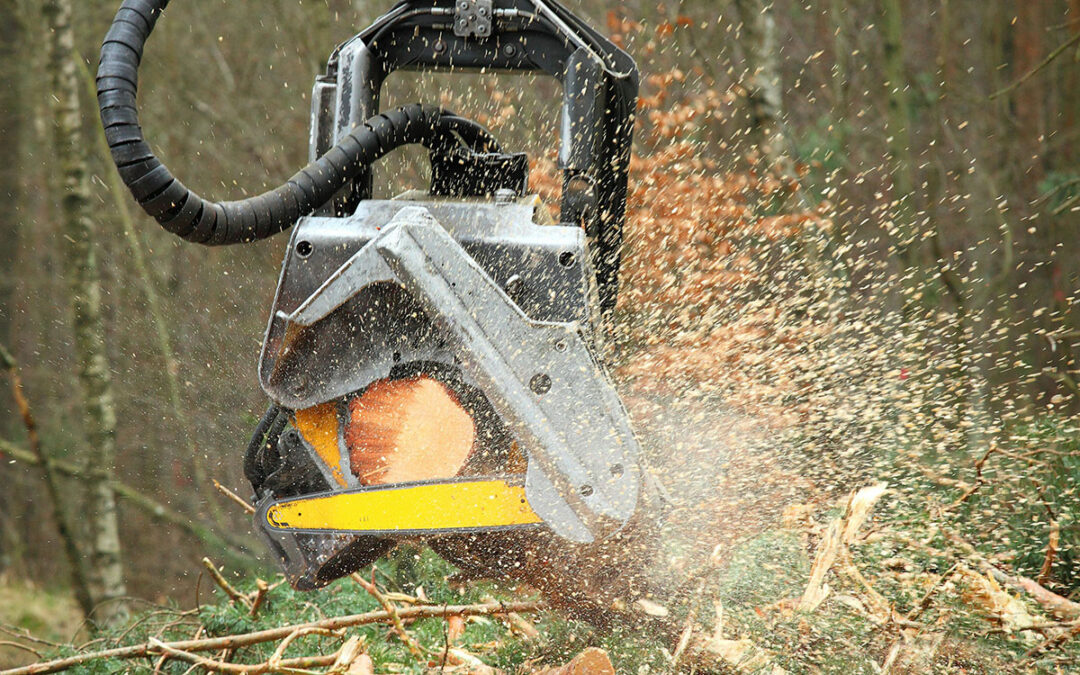
Forestry mulching uses specialized equipment to grind vegetation into mulch. Instead of cutting brush, piling debris, burning material, or hauling everything away, the machine processes the vegetation and leaves the mulch on-site. This can be an efficient way to reclaim overgrown land without stripping every area down to bare dirt.
That matters in the foothills because exposed soil can wash quickly on slopes. The mulch layer helps cover the ground, reduce erosion, and make the area easier to walk and maintain. It also allows property owners to keep a more natural look while removing the dense growth that made the land difficult to use.
Forestry mulching works well for many types of property improvement, including:
- Trail Clearing: Opening walking paths, access routes, hunting trails, and recreational paths.
- Brush Control: Grinding thick vegetation, saplings, thickets, and vines.
- Fence Line Access: Clearing overgrowth along property lines or existing fencing.
- Wooded Lot Cleanup: Improving visibility and access without removing every mature tree.
- Field Edge Reclamation: Pushing back overgrowth around fields, yards, and pastures.
- Storm Debris Support: Processing certain downed limbs, brush, and damaged vegetation.
When Forestry Mulching Makes The Most Sense
Forestry mulching is often a good fit when the goal is to make land more accessible and manageable. If you have a wooded or overgrown area that you cannot walk through, mow around, or inspect properly, mulching can open it up quickly.
It is also useful when a property owner wants to improve the land without turning it into a bare construction site. Many people want to keep mature trees, preserve a natural setting, or simply reduce the growth that has taken over. Forestry mulching can help accomplish that.
For land that has been neglected for years, forestry mulching can also reveal what else is happening on the property. Once brush and saplings are cleared, the owner may find stumps, drainage problems, old junk, erosion, or access issues that need additional work.
When Traditional Land Clearing May Be Better
Traditional land clearing may be the better option when vegetation is not the only issue. If large trees need to be removed, stumps need to come out, debris has to be hauled away, or the land needs to be prepared for a driveway, building pad, yard, or structure, additional equipment and services may be required.
Forestry mulching does not replace every part of land preparation. It may not create a smooth finished surface. It may not remove large stumps. It may not solve drainage problems. It may not provide the grading needed for a future project.
A property owner planning to build, install fencing, create a driveway, expand a yard, or prepare a work site should expect forestry mulching to be one possible step, not always the full solution.
The biggest difference between forestry mulching and full clearing often comes down to the finished result. Forestry mulching can make land more open and accessible while leaving mulch and uneven natural ground behind. That may be exactly what you want for trails, wooded access, hunting land, field edges, or general property cleanup.
If you need a smooth area that can be mowed, driven on, built on, or graded to drain properly, more work may be needed after mulching. Stump removal, grading, drainage correction, soil work, or debris removal may be part of the next phase.
Forestry Mulching And Drainage Concerns
Because forestry mulching leaves material on the ground, it can help reduce exposed soil and surface erosion. However, it does not automatically fix drainage problems. If water is running across the property in the wrong direction, collecting in low spots, washing out access routes, or moving toward buildings, drainage work may still be needed.
In many projects, mulching opens the land so the drainage problem can be seen clearly. After that, Foothills Land Services can help determine whether grading, French drains, swales, ditching, or other water management work should follow.
How Foothills Land Services Helps You Choose
Foothills Land Services helps property owners decide whether forestry mulching, traditional clearing, or a combination of services makes the most sense. We consider what is growing, what needs to be removed, how the land will be used, how water moves, and what kind of finish the property owner wants.
If your goal is to reclaim overgrown land, open trails, reduce brush, or improve access, forestry mulching may be a smart first step. If your goal is construction, driveway work, full site prep, drainage correction, or a smooth finished area, additional land services may be needed.
Call Foothills Land Services For Forestry Mulching And Land Clearing
If your property is overgrown, hard to access, storm-damaged, or ready for improvement, Foothills Land Services can help. We provide forestry mulching, land clearing support, tree and stump removal, storm cleanup, grading, drainage solutions, junk removal, building demolition, and more.
Contact Foothills Land Services to talk through the best way to reclaim and improve your property.